The North Little Rock Tax Bill That Depends on Who Owned the House Before You
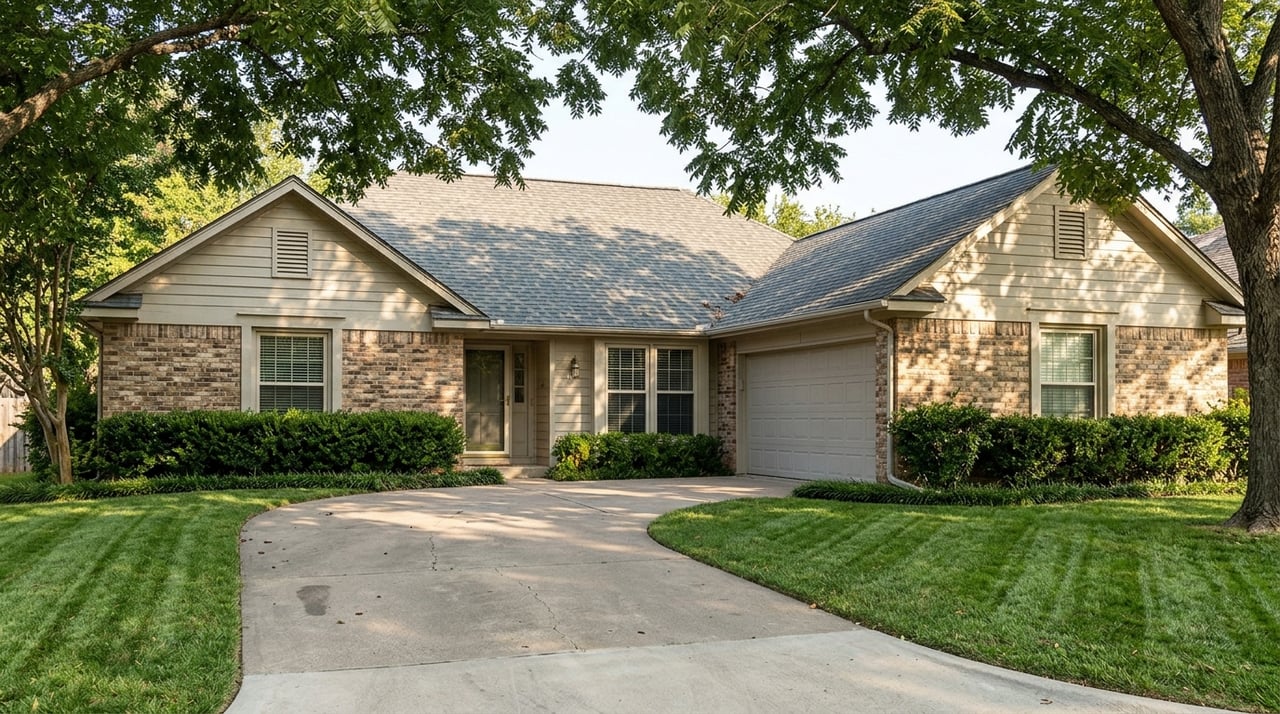
Picture two houses on the same North Little Rock street. Same square footage, same year built, same $200,000 price tag on the day each one last sold. If one changed hands ten years ago and the other closes this month, the owners will not pay the same property tax bill. Not close, in some cases. The gap has nothing to do with the homes themselves. It comes from a piece of the Arkansas Constitution most buyers never hear about until their first full tax bill lands, months after closing, at a number their closing disclosure never predicted.
That gap just got wider. In May 2025, North Little Rock School District voters approved a property tax increase for the first time since 2012, and anyone buying a home in the district this year is stepping into that new math on day one, while the seller down the street may still be paying on an old one.
Arkansas caps how fast a home's taxable value can rise while you own it. Under Amendment 79, the taxable value of a homestead property can only increase 5 percent per year until it catches up to full market value, no matter how much the home has actually appreciated. A homeowner who bought a decade ago and never sold could still be paying taxes on an assessed value well below what the county would say the house is worth today.
That protection disappears the moment the house sells. A new sale is exactly the kind of event that resets the clock, since the constitutional language limits the increase to "not more than five percent (5%) of the assessed value of the parcel for the previous year," and a change in ownership triggers a fresh look at market value rather than a continuation of the old cap. Arkansas's own tax officials describe this plainly: the taxable value of a homestead can only rise 5 percent annually until it reaches full assessed value, which means a long-held home can sit well under that ceiling for years while a freshly purchased one gets appraised at the top of it immediately.
Here is where it catches buyers off guard. The closing disclosure's estimated tax proration is built from the seller's most recent bill, which reflects the seller's capped, possibly years-old assessed value. Your actual first full-year bill, mailed the following spring, gets calculated from your new purchase-driven assessment. The two numbers can be meaningfully different, and the difference shows up after you already own the house.
To see how much daylight that can open up, look at a simplified version of the math using Arkansas's standard formula: taxable value equals 20 percent of appraised value, multiplied by the local millage rate.
| Long-time owner (capped) | New buyer (reset to market) | |
|---|---|---|
| Appraised value | $200,000 | $200,000 |
| Taxable value under 5% annual cap | Could still sit below $40,000 if reappraisals have outpaced 5% growth in recent years | Resets to full 20%, or $40,000, at purchase |
| Effect | Pays tax on a base the county hasn't fully caught up to | Pays tax on the full current assessment starting year one |
This is not a hypothetical quirk. It is baked into how Arkansas designed the cap, and it means two owners of an identical house can be paying materially different bills for reasons that have nothing to do with either home's condition.
The reset effect is one layer. Geography inside North Little Rock is another. Effective property tax rates are not uniform across the city, because ZIP codes carry different combinations of city, county, school, and special assessment district levies stacked on top of the same base county rate. A three-bedroom near the lakes in Lakewood and a similarly priced three-bedroom in Rose City or Park Hill can land on different effective rates for reasons that live entirely in which local taxing districts attach to that specific parcel, not in the home's price or condition. Countywide comparisons put North Little Rock's effective rates in a range that runs from under 1 percent to well over 1 percent depending on the ZIP code in question.
For a buyer comparing two listings at the same price, that means the tax line on your monthly payment estimate is not just a function of the sale price and a single citywide rate. It depends on exactly which parcel you're buying, and that detail sits in county records rather than on the listing sheet.
Now add the timing piece. On May 13, 2025, North Little Rock School District voters narrowly approved a millage increase, 1,706 to 1,514, the district's first since 2012, raising the school portion of the local rate from 48.3 to 52.3 mills. It was the identical four-mill proposal voters had rejected the previous November, brought back for a second vote. Superintendent Dr. Gregory Pilewski framed the package around three capital priorities: a new middle school backed by a $20.8 million state allocation the district has until 2028 to spend, a renovation of the district's landmark Ole Main structure, and an indoor sports and activity complex, the kind of facility North Little Rock had been the only Class 7A conference member without. The increase pushed North Little Rock's millage to among the highest in the state, trailing only three much smaller districts.
The math on that increase is concrete, not estimated. District supporters calculated the four mills at about $80 more a year for a $100,000 home, $120 more for a $150,000 home, and $200 more for a $250,000 home, all using the standard formula of taxable value, 20 percent of appraised value, multiplied by mills divided by 1,000.
The work is already visible on the ground. As of early August 2026, the district reported the steel frame complete on the new middle school campus, a roughly $68 million project the superintendent said he hopes will be ready for seventh and eighth graders within the year.
Where it gets interesting for a buyer is the interaction with the reset described above. Arkansas counties bill ad valorem taxes about a year behind the assessment they're based on, so a millage increase approved in one year typically shows up in full only on the following year's bills. Anyone who already owned a North Little Rock home in 2025, and whose taxable value is still capped below full market value under Amendment 79, sees the new millage phased onto a smaller base. Anyone closing on a North Little Rock home this year is stepping straight into the new millage rate applied to a taxable value that resets to full market value at the moment of purchase. Same school district, same new rate, different starting point.
There is a small offset worth knowing about. The Arkansas General Assembly raised the statewide Homestead Property Tax Credit to as much as $600 for 2026 tax bills, up from the prior $500 cap, and that credit applies directly against the bill for any owner-occupied primary residence regardless of when it was purchased.
None of this should scare anyone out of North Little Rock. It should change what you ask before you sign.
Does the 5 percent cap protect me the moment I buy the house? No. The cap applies to how much your taxable value can rise each year once it is set, but a sale itself is what resets the starting point to current market value. The protection builds over time you own the home, not from the day you close.
Will my first tax bill match what the seller was paying? Not necessarily, and often not closely. The seller's bill reflects their capped assessed value, which may be years behind market. Your first bill reflects your purchase-driven reassessment.
Does the school millage increase apply to every homeowner in the district, even without kids in school? Yes. Millage rates apply to all real property within the district's boundaries regardless of household composition. The rate is a function of the parcel, not who lives in it.
A tax estimate on a listing sheet is a starting point, not a forecast. If you are comparing homes in North Little Rock against options elsewhere in Central Arkansas, the real number worth budgeting around is what your bill looks like after the reset, not what the seller happens to be paying today. That is exactly the kind of detail worth running past someone who tracks these mechanics for a living before you write an offer. If you want a clearer picture of what a specific North Little Rock property is likely to cost you in year one, McLellan & Associates Real Estate Group can walk through the numbers with you and put together a Free Home Valuation that accounts for more than just the sale price.
Stay up to date on the latest real estate trends.


When you work with our team, you gain experienced advocates committed to helping you achieve your real estate goals. We combine local market knowledge, strategic guidance, and exceptional service to deliver a positive experience from start to finish.